What is TOPCon Technology and Why is it Better Than PERC?
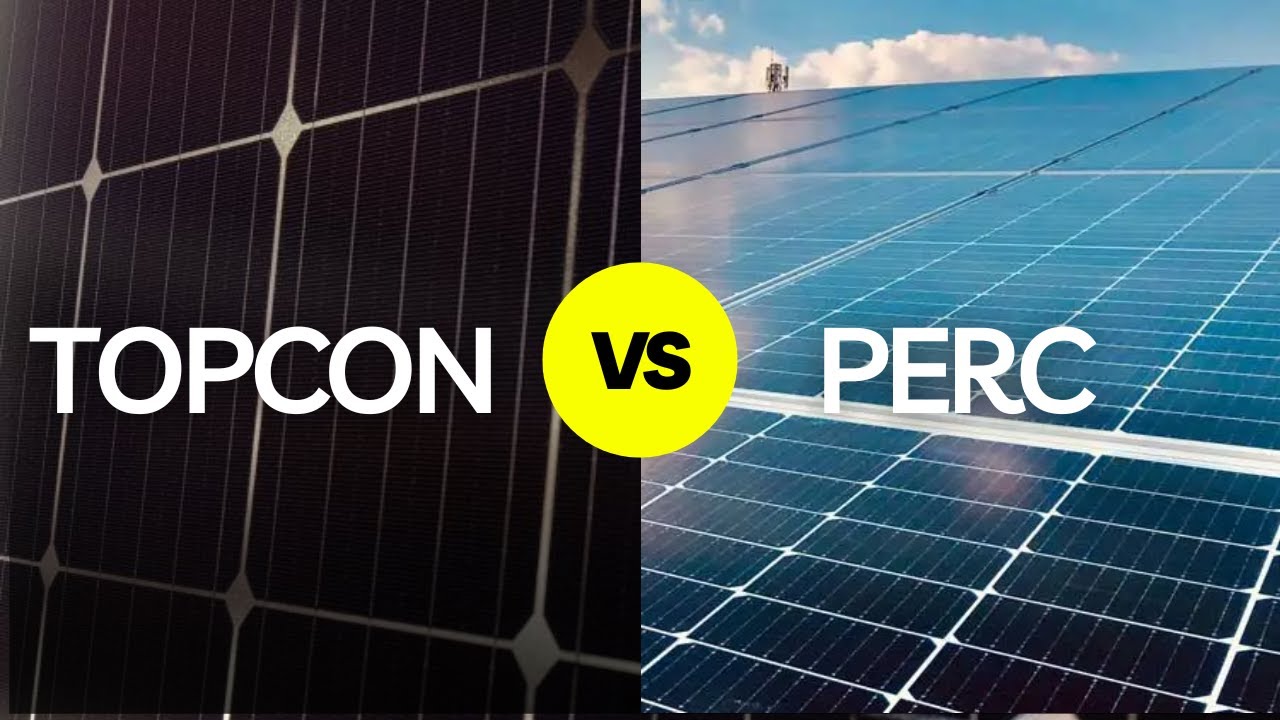
PERC vs TOPCon: Which Solar Panel Technology Should You Choose in 2026?
If you are choosing solar panels for a private home, business, or commercial solar station, you will almost certainly come across two major technologies: PERC and TOPCon.
At first glance, the difference may seem purely technical, but in reality it directly affects:
- how much electricity your system will generate;
- how panels perform during hot summer days;
- how quickly they degrade over 10–20 years;
- how many kW you can get from limited roof space.
Let’s break it down in simple terms and see which technology is best suited for your project.
What Is PERC?
PERC (Passivated Emitter and Rear Cell) is an improved version of classic P-Type silicon solar cell technology.
Its main feature is a special passivation layer on the rear side of the cell. This layer reduces electron losses and allows the panel to use sunlight more efficiently.
PERC became the industry “workhorse” over the last decade. Most solar power systems installed worldwide between 2018 and 2024 use PERC panels.
Advantages of PERC
- proven and well-established technology;
- lower manufacturing cost;
- more affordable final price;
- stable performance in standard conditions;
- efficiency typically between 20–22%.
Disadvantages of PERC
Despite its popularity, the technology is gradually reaching its development limits.
Main drawbacks:
- higher long-term degradation;
- greater efficiency losses under high temperatures;
- lower power generation per square meter;
- weaker performance in cloudy weather and low-light conditions.
For large ground-mounted solar farms this is not always critical, but for residential rooftops the difference can already be noticeable.
What Is TOPCon?
TOPCon (Tunnel Oxide Passivated Contact) is a next-generation technology based on N-Type solar cells.
It uses an ultra-thin tunnel oxide layer between the silicon substrate and the polysilicon contact. It sounds complicated, but the idea is simple: the panel loses less energy internally and converts sunlight into electricity more efficiently.
Today, TOPCon is gradually becoming the new industry standard, especially in the premium residential segment.
Advantages of TOPCon
Higher Efficiency
TOPCon panels already achieve 22–24% efficiency in mass production.
In practice, this means:
- more energy generation from the same roof area;
- fewer panels required for the same power output;
- savings on mounting structures and installation space.
For example, if your roof area is limited, the difference between PERC and TOPCon may provide hundreds of additional kWh per year.
Better Performance in Heat
In real conditions, solar panels can heat up to 60–70°C during summer.
TOPCon has an important advantage here — a lower temperature coefficient. This means the panel loses less performance during extreme heat.
This is especially important for southern regions with long and hot summers.
Lower Degradation
Every solar panel gradually loses power output over time. However, TOPCon degrades more slowly.
Typical figures:
- PERC: around 0.55% power loss per year;
- TOPCon: around 0.4% or even lower.
After 25 years, the difference becomes very noticeable.
A TOPCon panel may still retain over 88–90% of its original output, while older PERC models are often closer to 80–85%.
Better Low-Light Performance
TOPCon panels generally perform better:
- in the early morning;
- in the evening;
- during cloudy weather;
- in winter conditions.
This is important because a solar station should work efficiently not only on perfect sunny summer days.
Better Bifacial Performance
Many TOPCon panels are bifacial.
This means they generate electricity not only from the front side, but also from the rear side using reflected sunlight.
On bright surfaces or ground-mounted systems, this can provide:
- +5–15% extra generation in real-world conditions;
- sometimes even up to +25% in ideal environments.
What Is BC (Back Contact)?
BC or Back Contact is an even more premium solar technology.
In these panels, all electrical contacts are moved to the rear side of the solar cell. Because of this:
- the front side is completely “clean”;
- there is less shading of the photovoltaic cell;
- efficiency is higher;
- the appearance is more aesthetically pleasing.
These panels are often chosen for:
- premium residential homes;
- architectural and designer projects;
- installations where aesthetics matter.
BC panel efficiency already exceeds 23%+.
The downside is the significantly higher price.
Which Technology Should You Choose?
PERC — When Budget Matters Most
PERC is a good choice if:
- your budget is limited;
- you have plenty of available installation space;
- you are building a large ground-mounted system;
- minimizing upfront investment is the priority.
For industrial solar fields and large commercial projects, PERC still remains a solid option.
TOPCon — The Best All-Around Modern Choice
TOPCon is worth choosing if:
- your roof space is limited;
- you want maximum energy generation;
- the system is planned for long-term operation;
- efficiency during both summer and winter matters;
- you want better long-term return on investment.
This is why TOPCon is rapidly replacing PERC in the residential market.
BC — When You Want the Maximum
BC technology is the choice for those who want:
- the highest possible efficiency;
- premium aesthetics;
- maximum generation from every square meter.
However, you should be prepared for a higher system cost.
Why Does This Matter?
Many buyers only look at panel wattage — for example 580W or 620W. But the technology itself can sometimes be more important than the wattage number.
Two panels with the same rated power may:
- behave differently in hot weather;
- degrade at different rates;
- produce different winter output;
- have very different long-term lifespan and performance.
That’s why when choosing a solar system, it’s important to consider not only price, but also:
- cell technology type;
- degradation warranty;
- temperature coefficient;
- efficiency rating;
- manufacturer reputation.
Conclusion
PERC is a solid and affordable classic that is still relevant for budget-friendly and large-scale projects.
TOPCon is a more modern technology with higher efficiency, lower degradation, and better real-world performance. It is quickly becoming the new industry standard.
BC is the premium segment for those who want maximum performance and aesthetics.
In short:
- PERC — cheaper;
- TOPCon — more optimal;
- BC — the best, but more expensive.
If you are planning a solar power system and are unsure which technology is best for your roof or business, it is always better to select the solution individually based on roof orientation, available space, and project goals.