Solar Panel Maintenance: Do You Really Need to Clean and Clear Snow?
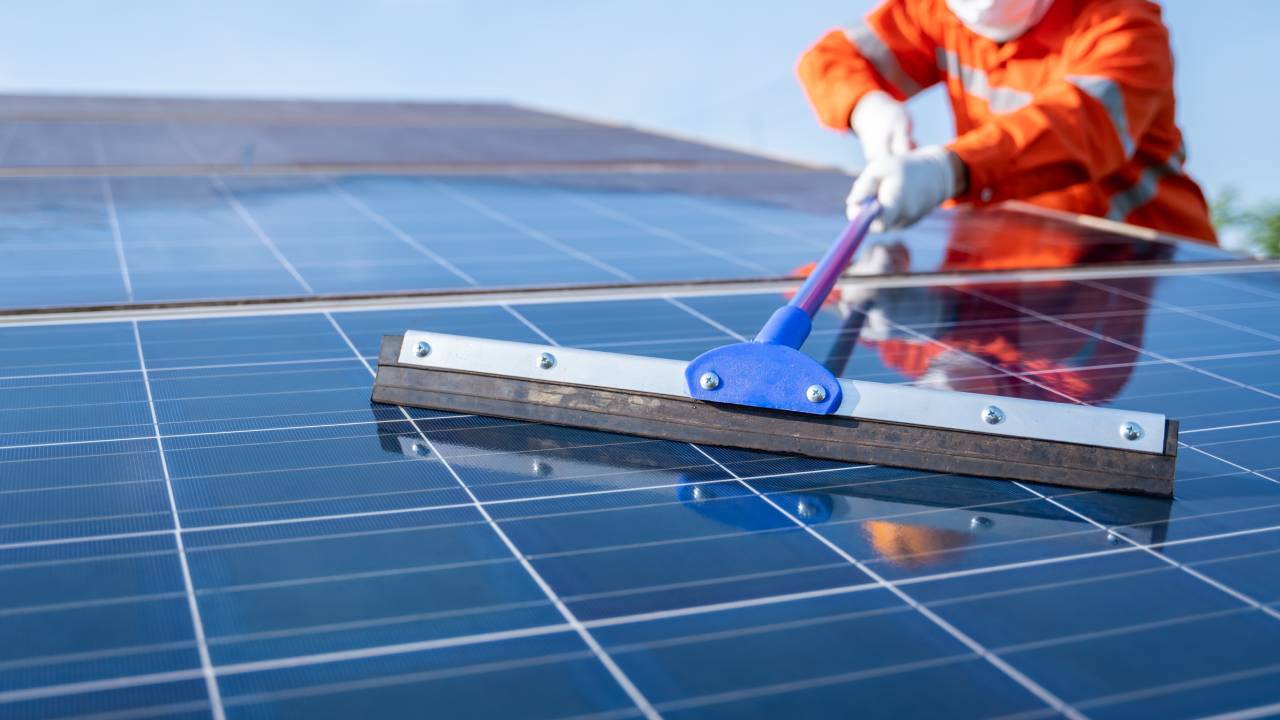
Solar panels are a 25-30 year investment. While they are generally “set and forget” systems, minimal maintenance can boost their performance by 5–15%.
Let’s look at what you should actually do—and what you should avoid—to keep your system running efficiently without causing damage.
1. Dust and Pollen: When is it time to wash?
Most of the time, rain does an excellent job of cleaning the panels. However, in Ukraine, there are two periods when you might need to intervene:
- Spring (Blooming): Tree pollen can create a sticky film that light rain won’t wash away.
- Summer (Drought): Dust from roads or nearby fields can significantly “shade” the solar cells.
How to wash correctly:
- Water temperature matters: Never wash hot panels in the middle of a sunny day. The thermal shock can cause micro-cracks in the glass. Do it in the early morning or evening.
- No harsh chemicals: Use plain water or mild detergents. Abrasive powders will scratch the anti-reflective coating.
- Soft brushes only: Use specialized telescopic brushes with soft bristles or microfiber cloths.
2. Snow on Panels: To clear or to wait?
This is the most common winter question.
- The good news: Panels are usually installed at an angle, and their surface is very smooth. The sun heats the dark cells, causing the snow to slide off naturally.
- When to clear it: Only if there is a very thick layer of wet snow that hasn’t moved for 2-3 days and you desperately need the energy to charge your batteries.
Important: Never use metal shovels or ice scrapers! You will damage the tempered glass. The best tool is a soft roof rake or a foam squeegee on a long pole.
3. Technical Inspection
Besides surface cleanliness, you should check the technical aspects once a year:
- Tighten Mounts: Ensure bolts haven’t loosened due to wind and vibrations.
- Cable Integrity: Check for frayed insulation or damage caused by rodents (this happens more often than you’d think).
- Inverter Hygiene: Dust in the inverter’s cooling fans can lead to overheating. Simply wipe the casing and ensure the air vents are clear.
4. Birds — An Unexpected Issue
Bird droppings can create “hot spots” on the panel. Because it’s a dense, opaque spot, the cells underneath can overheat, potentially leading to premature failure of the module. If you see such spots, it’s best to remove them as soon as possible.
Q-Sun Tip: If your panels are installed on a high or steep roof, do not risk your safety. It’s better to use a professional maintenance service. At Q-Sun, we provide consultations and support for maintaining our systems to ensure they operate at peak capacity.